Glenn Anders: The Broadway Veteran Behind a Classic Film Noir Performance
The Life, Broadway Career, Famous Films, and Lasting Legacy of Glenn Anders

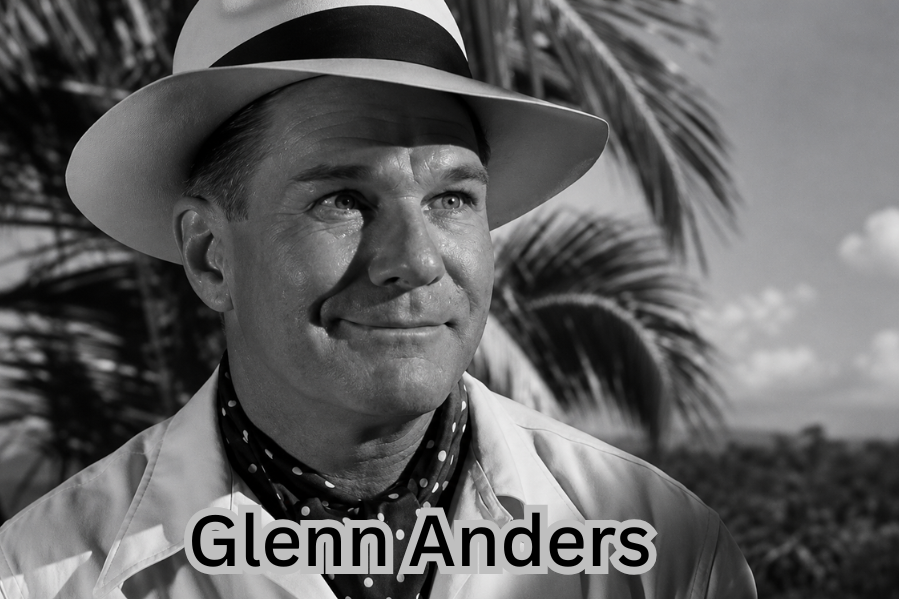
Glenn Anders built his reputation where an actor had little room to hide: on the Broadway stage, performing demanding roles before live audiences night after night. Yet many film enthusiasts first encounter him as the unsettling George Grisby in Orson Welles’ The Lady from Shanghai. He was a leading presence in American theatre long before his most familiar screen appearance, and his work connected him with some of the twentieth century’s most important playwrights.
Glenn Anders Quick Bio
| Detail | Information |
|---|---|
| Full Name | Glenn Anders |
| Profession | Stage and Film Actor |
| Date of Birth | 1 September 1889 |
| Birthplace | Los Angeles, California, USA |
| Nationality | American |
| Ethnicity | Swedish-American heritage |
| Education | Wallace Dramatic School, Columbia University |
| Famous For | Broadway performances and The Lady from Shanghai |
| Broadway Debut | Just Around the Corner (1919) |
| Film Debut | Sally of the Sawdust (1925) |
| Notable Film | The Lady from Shanghai (1947) |
| Notable Role | George Grisby |
| Career | 1919–1958 (Broadway) |
| Marital Status | Not reliably documented |
| Children | Not publicly confirmed |
| Date of Death | 26 October 1981 |
| Age at Death | 92 years |
| Place of Death | Englewood, New Jersey, USA |
| Burial Place | Kensico Cemetery, Valhalla, New York |
| Known Legacy | Appeared in three Pulitzer Prize-winning plays |
Who Was Glenn Anders?
Glenn Anders was an American stage and film actor whose Broadway career extended from 1919 to 1958. He appeared in dramas, comedies and musical productions, earning particular distinction through his involvement in three plays that won the Pulitzer Prize for Drama.
Unlike performers who moved permanently from theatre into Hollywood, he maintained his principal professional identity on stage. His comparatively small filmography therefore tells only part of his story.
Early Life and Acting Education
Anders was born in Los Angeles, California, on 1 September 1889, according to widely used biographical accounts. His father was a Swedish immigrant, while his mother came from Vermont. The Internet Broadway Database gives 1890 as his birth year, so historical records are not entirely consistent.
He trained at the Wallace Dramatic School in Los Angeles and gained practical experience with local repertory companies. An early appearance with the Los Angeles Stock Company in Shakespeare’s Macbeth introduced him to the discipline of performing established dramatic material.
He also toured the Orpheum vaudeville circuit.
His Arrival on Broadway
In 1919, Anders established himself in New York and began studying at Columbia University, where he attended classes until 1921. At the same time, he was finding work in the city’s theatre district.
His Broadway debut came in Just Around the Corner in February 1919. He subsequently appeared in Civilian Clothes and Scrambled Wives, building experience across productions with different theatrical demands.
A notable early opportunity arrived with The Demi-Virgin, which opened in 1921. Anders played Wally Dean in this controversial but commercially successful comedy. The engagement gave him greater visibility and demonstrated that he could hold an important role in a major commercial production.
Three Pulitzer Prize-Winning Plays
Perhaps his most distinctive Broadway achievement was performing in the original productions of three dramas that received Pulitzer Prizes. The prizes honoured the plays and their authors, not Anders individually, but his involvement places him within an exceptional period of American theatrical writing.
Hell-Bent Fer Heaven (1924)
In Hatcher Hughes’ Hell-Bent Fer Heaven, Anders portrayed Andy Lowry. The drama was set in the Appalachian mountains and explored religious extremism and personal conflict. It won the 1924 Pulitzer Prize for Drama.
They Knew What They Wanted (1924)
Later that year, Anders appeared as Joe in Sidney Howard’s They Knew What They Wanted. Set among California agricultural workers, the play explored desire, marriage, trust and disappointment.
It won the 1925 Pulitzer Prize for Drama.
Strange Interlude (1928)
His third Pulitzer connection came through Eugene O’Neill’s Strange Interlude. Anders originated the Broadway role of Edmund Darrell, a doctor whose relationship with Nina Leeds forms part of the play’s complicated emotional structure.
The nine-act production experimented with spoken inner thoughts and ran for approximately five hours, including a dinner interval. Its unusual form placed considerable demands on the actors. Winning the 1928 Pulitzer Prize, it became one of the defining dramas of its period.
A Career Beyond the Award-Winning Productions
The Pulitzer plays represent only a fraction of his theatrical work. In 1929, Anders appeared as Reuben Light in O’Neill’s Dynamo, returning to a playwright known for psychological complexity and challenging characters.
He portrayed Pat Farley in Philip Barry’s Hotel Universe in 1930 and played Lieutenant Frederick Henry in a Broadway adaptation of A Farewell to Arms that same year. His subsequent credits reflected considerable range.
During the 1930s, he appeared in Call It a Day, The Masque of Kings, Three Waltzes and Skylark. Later engagements included Soldier’s Wife in 1944 and Moss Hart’s theatrical comedy Light Up the Sky in 1948, in which he played Carleton Fitzgerald.
Glenn Anders in Films
His screen debut came in D. W. Griffith’s silent comedy Sally of the Sawdust (1925), in which he played Leon, an acrobat. Film roles remained occasional rather than his principal source of work.
His credits included Laughter (1930), By Your Leave (1934), Nothing but the Truth (1941) and Nancy Goes to Rio (1950).
He also appeared briefly in Rhapsody in Blue (1945).
The Lady from Shanghai: His Best-Known Film Role
For film historians, Anders is particularly memorable as George Grisby in Orson Welles’ The Lady from Shanghai. Produced in the 1940s, the picture premiered internationally in 1947 and opened in the United States in 1948.
Grisby is the business partner of lawyer Arthur Bannister, played by Everett Sloane. The film follows sailor Michael O’Hara, played by Welles, into a dangerous web of attraction and deception involving Bannister’s wife Elsa, portrayed by Rita Hayworth.
Why George Grisby Stands Out
Grisby approaches Michael with a proposal involving a staged murder and a written confession. Anders makes the character deeply uncomfortable to watch: nervous smiles, anxious intensity and unpredictable behaviour suggest that something is wrong long before the plot’s full implications become clear.
His performance fits the film’s atmosphere of distrust, where appearances conceal ulterior motives. Although Welles’ direction and the film’s celebrated visual sequences attract much of the attention, Grisby remains central to its disturbing sense of instability.
Later Screen Roles and His Final Broadway Appearance
In 1951, Anders appeared in M, the American remake of Fritz Lang’s 1931 crime drama, and in the comedy Behave Yourself!. He also played Andrews in the adventure film Tarzan’s Peril.
Meanwhile, his stage career continued. He played Dr. Fifield in The Remarkable Mr. Pennypacker, which opened in 1953, and his final Broadway credit came as Lord Hector in Time Remembered, running from 1957 into June 1958.
The latter production brought him into a company featuring Richard Burton, Helen Hayes and Susan Strasberg, marking a fitting final chapter to his long association with New York theatre.
Retirement, Personal Life and Death
Following his retirement from Broadway, Anders spent several years in Mexico.
He returned to the United States in later life and died on 26 October 1981 at the Actors’ Fund Home in Englewood, New Jersey. Using the commonly cited 1889 birth year, he was 92. He was buried at Kensico Cemetery in Valhalla, New York.
His Place in American Theatre History
Anders’ legacy cannot be measured simply by counting films. He belonged to a generation for whom Broadway was a central arena of serious acting, and he worked through decades of changes in dramatic style and public taste.
His appearances in Pulitzer-winning productions connect him to Hughes, Howard and O’Neill, while his work with Welles provides a surviving example of his striking character acting. The combination makes him significant to both theatre history and classic cinema.
Conclusion
Glenn Anders spent most of his working life on the stage, developing a career defined by versatility, endurance and influential productions. His three Pulitzer-associated Broadway roles establish his theatrical importance, while The Lady from Shanghai preserves one of his most vivid performances for modern audiences. Together, those achievements explain why his name still deserves attention beyond the credits of a single film.
Frequently Asked Questions
Who was Glenn Anders?
He was an American actor best known for his extensive Broadway career and his performance as George Grisby in The Lady from Shanghai. Beginning his New York stage career in 1919, he appeared in productions by Eugene O’Neill, Sidney Howard and other major playwrights. His final Broadway appearance was in Time Remembered.
How old was Glenn Anders when he died?
He died on 26 October 1981. Most biographical sources give his birth date as 1 September 1889, which means he was 92 years old. However, the Internet Broadway Database records his birth year as 1890, so there is a minor discrepancy among historical accounts.
Which Pulitzer Prize-winning plays featured Glenn Anders?
He appeared in Hell-Bent Fer Heaven, the 1924 winner; They Knew What They Wanted, the 1925 winner; and Strange Interlude, the 1928 winner. His roles were Andy Lowry, Joe and Edmund Darrell, respectively. The awards went to the plays, not to individual performers.
Was Glenn Anders married or did he have children?
Reliable, readily accessible theatrical biographies focus primarily on his professional career rather than his family relationships. There is insufficient consistently documented evidence to establish a spouse or children with confidence. His confirmed life story centres on his Los Angeles upbringing, decades on Broadway and later retirement.
What was Glenn Anders’ most famous movie?
His most recognisable film appearance was as George Grisby in Orson Welles’ The Lady from Shanghai, featuring Rita Hayworth and Everett Sloane. The film is generally dated 1947, although its United States release followed in 1948. Anders’ tense portrayal of Grisby is a memorable part of its film noir atmosphere.
READ THIS TOO Frankie J. Alvarez: Biography, Career, Movies, TV Shows and Personal Life



One Comment