
Introduction
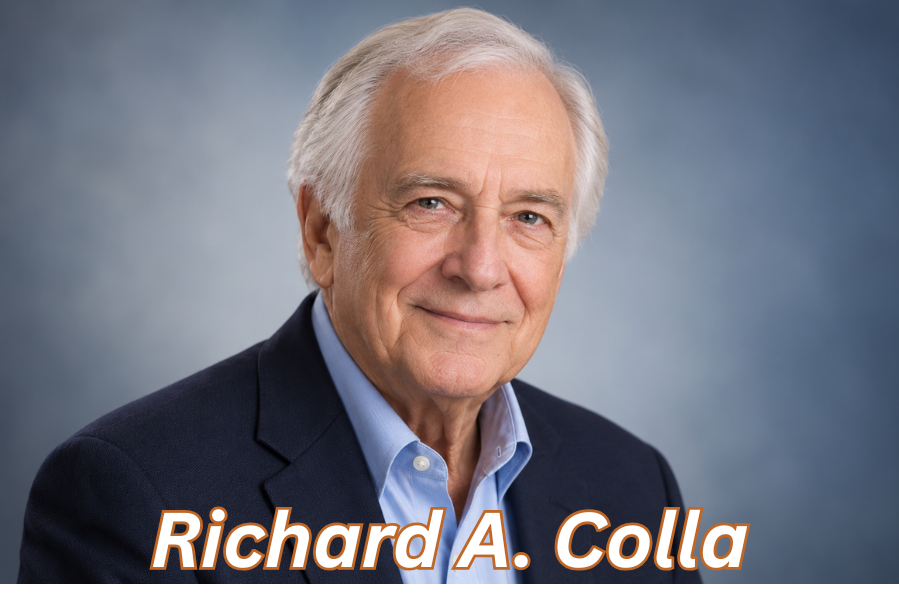
Richard A. Colla helped shape several memorable corners of American television, even if his name was less familiar than those of the stars appearing on screen. His work stretched from crime dramas and family adventures to ambitious science-fiction productions, including the original Battlestar Galactica and Star Trek: The Next Generation.
An actor before becoming an established director, Colla built a career around moving comfortably between genres and formats. Born on April 18, 1936, he worked in entertainment for decades before his death on December 24, 2021, at age 85. His credits span several generations of television. Richard A. Colla – Quick Bio
| Detail | Information |
|---|---|
| Full Name | Richard A. Colla |
| Known As | Dick Colla |
| Date of Birth | April 18, 1936 |
| Date of Death | December 24, 2021 |
| Age at Death | 85 years |
| Nationality | American |
| Profession | Actor, Film Director, Television Director, Producer |
| Education | Marquette University |
| Wife | Denise Alexander (Actress) |
| Famous For | Battlestar Galactica, Star Trek: The Next Generation |
| Notable Films | Zig Zag, Fuzz, Olly Olly Oxen Free |
| Television Debut | Days of Our Lives (1965–1966) |
| Career Span | 1960s–2000 |
| Net Worth | Not publicly verified |
| Place of Death | Beverly Hills, California, USA |
From Theater Training to Hollywood
Education and Early Interests
Colla studied acting at Marquette University in Milwaukee, where he participated in the university’s theater community. Stage work gave him an early grounding in performance.
His initial Hollywood work was not confined to one side of the camera. He directed the short film The Soldier in 1962, featuring a young William Shatner, and later appeared as Tony Merritt in the NBC soap opera Days of Our Lives during 1965 and 1966.
The Transition to Directing
Rather than continuing primarily as an actor, Colla pursued directing. His early television assignments included The Legend of Jesse James, Gunsmoke, Judd for the Defense and The Virginian. He also worked on Ironside and McCloud, gaining experience with the pace and practical demands of network production.
Episodic directors had to work within established characters and tight schedules. His range became a professional strength. He learned to enter an established production, work with its performers and tell a complete story without losing the distinctive character of the series.
Richard A. Colla’s Feature Films
Colla’s theatrical work demonstrated how far his interests extended beyond television.
Zig Zag (1970)
His mystery thriller Zig Zag starred George Kennedy as an insurance executive who learns he has a serious medical condition and becomes involved in an unusual scheme connected to a murder investigation. It demanded careful handling of suspense.
Fuzz (1972)
Fuzz, starring Burt Reynolds and based on an Ed McBain novel, moved into police comedy. Its ensemble humor contrasted with Zig Zag. The contrast matters: directing a comic crime story requires different rhythms from building tension around a single increasingly desperate protagonist.
Olly Olly Oxen Free (1978)
In the family adventure Olly Olly Oxen Free, Katharine Hepburn played an eccentric woman who joins two boys in a hot-air-balloon adventure. Colla served as director and producer and received a story credit, making this a particularly personal entry in his feature-film work.
He was also originally hired to direct Sometimes a Great Notion, the adaptation of Ken Kesey’s novel. He left after several weeks of filming in 1970; Paul Newman subsequently took over directing duties. Accounts cite photographic disagreements and a planned throat operation.
The Science-Fiction Productions That Made Him Recognizable
The Questor Tapes (1974)
Before his best-known space adventure, Colla directed The Questor Tapes, a television film conceived by Star Trek creator Gene Roddenberry and written by Roddenberry and Gene L. Coon. Robert Foxworth played an android trying to uncover the purpose of his existence, with Mike Farrell appearing as a scientist who helps him.
The film blended an imaginative premise with questions about identity and humanity. It also strengthened his connections in science-fiction television.
Battlestar Galactica (1978)
Colla received the sole on-screen directing credit for “Saga of a Star World,” the pilot of the original Battlestar Galactica. Its story followed human survivors fleeing the Cylons.
Behind the scenes, the ambitious project was not straightforward. Accounts of its production describe disagreements between Colla and creator Glen A. Larson, followed by Colla’s departure before all filming and additional work were completed. He nevertheless retained the pilot’s directing credit.
Star Trek: The Next Generation (1987)
Colla later directed “The Last Outpost,” an early episode of Star Trek: The Next Generation. The episode is notable for introducing the Ferengi, a species that later became a familiar part of the franchise.
That single credit helps explain his continuing relevance to science-fiction fans. His science-fiction work spanned eras. For viewers following the people behind these franchises, Colla offers an unexpected link between Gene Roddenberry’s earlier television experiments and the later return of Star Trek.
Directing Some of Television’s Familiar Hits
Across the 1970s and 1980s, Colla worked on series with very different styles, including CHiPs, Miami Vice, Hunter, The Equalizer, MacGyver, Murder, She Wrote and Spenser: For Hire.
Individual credits include the Miami Vice story “Calderone’s Return (Part I),” the Murder, She Wrote episode “Hooray for Homicide” and MacGyver‘s “Hellfire.” Each demanded a different approach, from Miami Vice‘s atmosphere to MacGyver‘s inventive action.
His career shows how working directors shape familiar television without becoming household names. They collaborate with writers, cinematographers and casts while preserving the continuity audiences expect from an ongoing series.
Television Movies, Miniseries and Later Work
Colla also directed numerous self-contained television stories. The UFO Incident (1975), starring James Earl Jones and Estelle Parsons, dramatized the reported alien-abduction experience of Barney and Betty Hill. The film approached an extraordinary claim through a character-focused television drama rather than presenting the alleged event as established fact.
In 1981, he directed Don’t Look Back: The Story of Leroy “Satchel” Paige, about the celebrated baseball pitcher. Later credits included the science-fiction miniseries Something Is Out There (1988), along with television thrillers such as Blind Witness (1989) and Web of Deception (1994).
During the 1990s, Colla continued with projects including Zoya (1995), an adaptation of Danielle Steel’s novel, Hidden in Silence (1996), and Blue Valley Songbird (1999). His final listed directing credit was Growing Up Brady (2000), a television film inspired by Barry Williams’ memoir of his years on The Brady Bunch.
Marriage, Family and Environmental Work
Colla was married to actress Denise Alexander, remembered especially for playing Dr. Lesley Webber on General Hospital. Alexander also had a long association with Days of Our Lives. She died in March 2025, several years after her husband.
Away from Hollywood, Colla maintained a serious interest in conservation. He owned the Matilija Canyon Wildlife Refuge near Ojai, California, described in his IMDb biography as a 600-acre property, and supported efforts to protect privately held forestland.
He directed and executive-produced Reforestation (1987), an educational video narrated by William Shatner. He also used filmmaking to communicate a cause he valued.
Recognition and Professional Legacy
In 2018, the Caucus for Producers, Writers & Directors honored Colla with its Caucus Legend Award. It recognized his work across film and television.
His career is also a reminder that television history includes the people who carried projects from scripts to screens. A director responsible for a landmark pilot, a police procedural and a modest family film may leave no single, easily defined signature. Instead, the achievement lies in making very different productions work.
His science-fiction credits continue to interest fans of enduring franchises.
Conclusion
Richard A. Colla was more than the director of a famous science-fiction pilot. He was a versatile American filmmaker whose work embraced mysteries, dramas, comedies, television movies and conservation filmmaking. His story reflects adaptability and a wide-ranging interest in storytelling.
Frequently Asked Questions
Who was Richard A. Colla?
Richard A. Colla was an American actor, television director and film director, also credited professionally as Dick Colla. He appeared on Days of Our Lives before building a long directing career. He is especially remembered for his work on the original Battlestar Galactica, The Questor Tapes and numerous popular television series.
When was Richard A. Colla born, and how old was he when he died?
He was born on April 18, 1936, and died on December 24, 2021, in Beverly Hills, California. He was 85 years old. His published filmography spans work from the early 1960s through 2000, giving him a professional connection to several distinct periods of American screen entertainment.
Was Richard A. Colla married?
Yes. He was married to Denise Alexander, the actress best known for portraying Lesley Webber on General Hospital. Both worked in the television industry, although they established different professional identities. Alexander died in 2025. Colla’s personal life received considerably less public attention than his directing career.
What did Richard A. Colla direct on Battlestar Galactica?
He was the credited director of “Saga of a Star World,” the pilot of the original 1978 Battlestar Galactica. Production histories also record that he left before all filming was finished, with additional work handled afterward. His involvement remains part of the history of the show’s original launch.
Which Star Trek episode did Richard A. Colla direct?
Colla directed “The Last Outpost,” a first-season episode of Star Trek: The Next Generation broadcast in 1987. The episode introduced the Ferengi, who became recurring characters in the wider Star Trek universe. It is his most identifiable directing contribution to that franchise.
What was Richard A. Colla’s net worth?
There is no independently verified public figure for Richard A. Colla’s net worth. Although his credits document a substantial career as a director and occasional producer, they do not establish his earnings, assets or estate value. Online estimates without transparent evidence should not be treated as reliable financial information.
READ THIS TOO Evan Alex Cole: From Daytime Television to a Career in Dentistry

One Comment