John Anderson: Four Remarkable Lives in Music, Politics, Acting and Philosophy
John Anderson: Exploring the Lives, Careers, Achievements and Legacies of Four Remarkable Figures

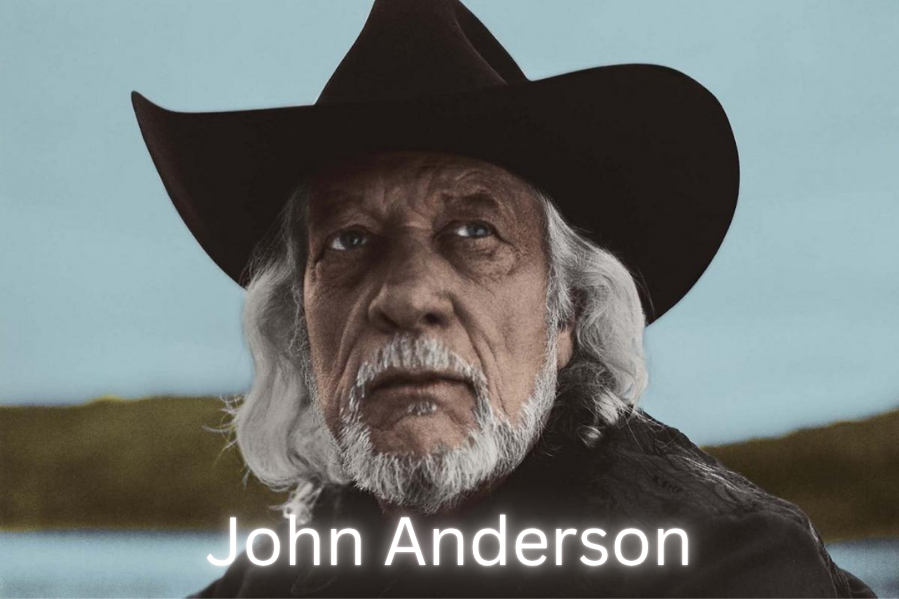
John Anderson is a familiar name in several very different fields. For country music fans, it belongs to the distinctive singer behind “Swingin’” and “Seminole Wind.” American political history associates it with a congressman who challenged the two-party system in 1980. Film enthusiasts may recognise a dependable Hollywood character actor, while students of philosophy encounter a Scottish-born academic who shaped intellectual debate in Australia.
These are four different people whose achievements should not be confused.
John Anderson – Quick Bio
| Detail | Information |
|---|---|
| Full Name | John David Anderson |
| Date of Birth | December 13, 1954 |
| Age (2026) | 71 years |
| Birthplace | Apopka area, Florida, USA |
| Nationality | American |
| Profession | Country Singer, Songwriter |
| Music Genre | Country, Neotraditional Country |
| Famous Songs | Swingin’, Seminole Wind, Straight Tequila Night |
| Career Beginning | 1970s |
| Latest Major Album | Years (2020) |
| Major Achievement | Country Music Hall of Fame (2024) |
| Marital Status | Married |
| Net Worth | Not independently verified |
| Known For | Distinctive voice and classic country music |
John Anderson: The Country Singer Who Kept Tradition Alive
The best-known contemporary bearer of the name is the American country singer born on 13 December 1954 in Orlando, Florida. Raised in nearby Apopka, he played rock music before embracing country.
From Florida to Nashville
As a teenager, Anderson became fascinated by the voices and storytelling of Merle Haggard and George Jones. After high school, he moved to Nashville, where his older sister Donna was already involved in the local music scene. Performing in clubs helped him establish a reputation for a voice that sounded unmistakably his own.
He signed with Warner Bros. Records in 1976. Performances alongside established artists introduced his music to wider audiences. “Your Lying Blue Eyes” became an important early chart success.
Country Music Hall of Fame and Museum
The Songs That Defined His Career
Anderson reached a new level in 1983 with “Swingin’,” a playful, energetic single that became one of the era’s biggest country hits. That year, he received the Country Music Association’s Horizon Award and Single of the Year honour for the song.
Songs such as “Wild and Blue” and “Black Sheep” helped establish him as an important neotraditional country voice.
His career revived with the 1992 album Seminole Wind. Its title track brought a reflective environmental theme into mainstream country music, while “Straight Tequila Night” returned him to the top of the charts. “Money in the Bank” followed as another major hit in 1993.
A Later Career and Hall of Fame Recognition
Anderson continued recording after his biggest radio successes. The 2020 album Years, produced by Dan Auerbach and David R. Ferguson, gave his mature voice room to explore resilience, gratitude and the passage of time. It included “Tuesday I’ll Be Gone,” a collaboration with Blake Shelton.
His influence also inspired the 2022 tribute album Something Borrowed, Something New, featuring younger country performers interpreting his material. Recognition followed at the highest institutional level when he was inducted into the Country Music Hall of Fame on 20 October 2024.
News
+1
His catalogue includes five number-one country singles and 20 Top Ten hits.
John B. Anderson: The Politician Who Challenged Party Politics
John Bayard Anderson, born in 1922 in Rockford, Illinois, became nationally recognised for his independent campaign in the 1980 United States presidential election. He had previously served two decades in Congress.
A Republican With an Independent Approach
He studied at the University of Illinois and Harvard Law School, served in the military during the Second World War and later pursued law and public service. Elected to the House of Representatives in 1960, he represented Illinois from 1961 until 1981.
Although he rose within Republican leadership, Anderson increasingly differed from parts of his party on civil rights and social policy. His support helped advance the Fair Housing Act of 1968, legislation addressing racial discrimination in housing. He also became an outspoken critic of President Richard Nixon during Watergate.
The 1980 Presidential Campaign
Anderson initially sought the Republican presidential nomination but eventually entered the general election as an independent. He challenged Republican Ronald Reagan and Democratic incumbent Jimmy Carter.
He proposed higher gasoline taxes alongside lower payroll taxes. He ultimately won about 6.6% of the national popular vote, but no electoral votes. Reagan won the presidency.
After leaving elected office, Anderson taught and advocated changes to American electoral systems. He helped establish FairVote and chaired its board for years, promoting reforms intended to increase voter choice and representation. He died in December 2017, aged 95, leaving a legacy closely associated with political independence.
+1
John Anderson: The Familiar Face of Classic Hollywood
Another John Anderson, born John Robert Anderson on 20 October 1922 in Clayton, Illinois, built a long acting career through supporting roles. He rarely occupied the centre of publicity, yet audiences encountered him across westerns, dramatic films and popular television series.
Film Roles and Television Appearances
His stern appearance, powerful voice and ability to portray authority figures made him valuable to casting directors. In Alfred Hitchcock’s Psycho (1960), he played California Charlie, the used-car dealer encountered by Marion Crane. He also portrayed Elder Hammond in Sam Peckinpah’s Ride the High Country (1962).
Television gave him particularly varied opportunities. He appeared in four episodes of The Twilight Zone, including “A Passage for Trumpet,” and became a familiar presence in western series. Decades later, he played Kevin Uxbridge in the Star Trek: The Next Generation episode “The Survivors.”
A Gift for Historical Characters
Anderson repeatedly portrayed Abraham Lincoln, drawing on a striking physical resemblance to the American president. He also played baseball commissioner Kenesaw Mountain Landis in Eight Men Out (1988).
His strength lay in the wide range of convincing characters he portrayed. He died on 7 August 1992, aged 69.
IMDb
John Anderson: The Philosopher Who Shaped Australian Realism
John Anderson the philosopher was born on 1 November 1893 in Stonehouse, Scotland. He studied mathematics and philosophy at the University of Glasgow.
Teaching and Philosophical Ideas
In 1927, he became Challis Professor of Philosophy at the University of Sydney. He remained in the position until retiring in 1958, teaching generations of students and developing the approach commonly called Australian realism.
His philosophy stressed that the world exists independently of human beliefs and that claims about reality must withstand rigorous examination. He rejected the idea that philosophical positions should be accepted simply because religious, political or academic authorities endorsed them.
His teaching encouraged rigorous argument and intellectual independence. Anderson’s positions were often controversial, especially on questions involving religion, censorship and educational freedom.
Influence Beyond the Lecture Hall
His impact extended through students such as John Passmore, David Armstrong and J. L. Mackie, who went on to become influential philosophers themselves. His writings were collected in Studies in Empirical Philosophy, published in 1962.
Anderson’s political convictions also changed over his lifetime. An early involvement with communist thinking gave way to strong criticism of communism. That evolution did not diminish his broader commitment to open disagreement and academic freedom.
He died in Sydney on 6 July 1962. His legacy includes the tradition of rigorous philosophical debate he nurtured in Australia.
Plato at Sydney
+1Why These Four Careers Are Often Confused
The name can cause confusion. The country singer was born in 1954, whereas the politician and actor were both born in 1922. The philosopher belonged to an earlier generation and worked primarily in Australia.
Adding a profession or notable work makes identification easier: “John Anderson Swingin’,” “John B. Anderson 1980,” “John Anderson Psycho” or “John Anderson Australian realism” each refers to a distinct individual.
Conclusion
The four notable men named John Anderson left marks on remarkably different fields. One helped sustain traditional country music; another challenged established presidential politics; a third enriched classic American film and television; and the fourth influenced generations of Australian philosophers. Their shared name is coincidental, but each career deserves recognition on its own terms.
Frequently Asked Questions
Who is John Anderson?
The name belongs to several notable public figures. The country singer is known for hits including “Swingin’” and “Seminole Wind.” John B. Anderson was an American congressman and independent presidential candidate. Another was a prolific character actor, while the Scottish-born philosopher John Anderson developed Australian realism at the University of Sydney.
What are John Anderson’s most famous country songs?
The singer’s best-known recordings include “Swingin’,” “Seminole Wind,” “Straight Tequila Night,” “Black Sheep” and “Money in the Bank.” His best-known hits blend humour, storytelling and reflective themes. The 1983 single “Swingin’” became a defining hit, while “Seminole Wind” helped lead his commercial resurgence during the 1990s.
Did John Anderson run for president?
Yes. John B. Anderson, a Republican congressman from Illinois, ran as an independent candidate in the 1980 US presidential election. He competed against Ronald Reagan and Jimmy Carter, earning approximately 6.6% of the popular vote. He won no electoral votes, but his campaign remains historically notable.
Which John Anderson appeared in Psycho?
John Robert Anderson, the American character actor born in 1922, appeared in Alfred Hitchcock’s 1960 film Psycho. He portrayed California Charlie, the used-car salesman. His other credits included Ride the High Country, The Twilight Zone, Eight Men Out and Star Trek: The Next Generation.
What did John Anderson contribute to philosophy?
The Scottish-born Australian academic developed a distinctive realist approach to philosophy and taught at the University of Sydney from 1927 to 1958. He defended critical inquiry and academic freedom, while influencing philosophers including John Passmore and David Armstrong. His work remains relevant to the history of twentieth-century philosophy in Australia.
Is country singer John Anderson in the Hall of Fame?
Yes. The American singer was formally inducted into the Country Music Hall of Fame in October 2024. The honour recognised his distinctive singing, influential country recordings and contributions to the genre across several decades. He had previously entered the Nashville Songwriters Hall of Fame in 2014
READ THIS TOO Glenn Anders: The Broadway Veteran Behind a Classic Film Noir Performance


One Comment