R. G. Armstrong: The Remarkable Career Behind Hollywood’s Toughest Characters
Explore the Life, Early Years, Iconic Movies, Personal Life, and Lasting Hollywood Legacy of R. G. Armstrong

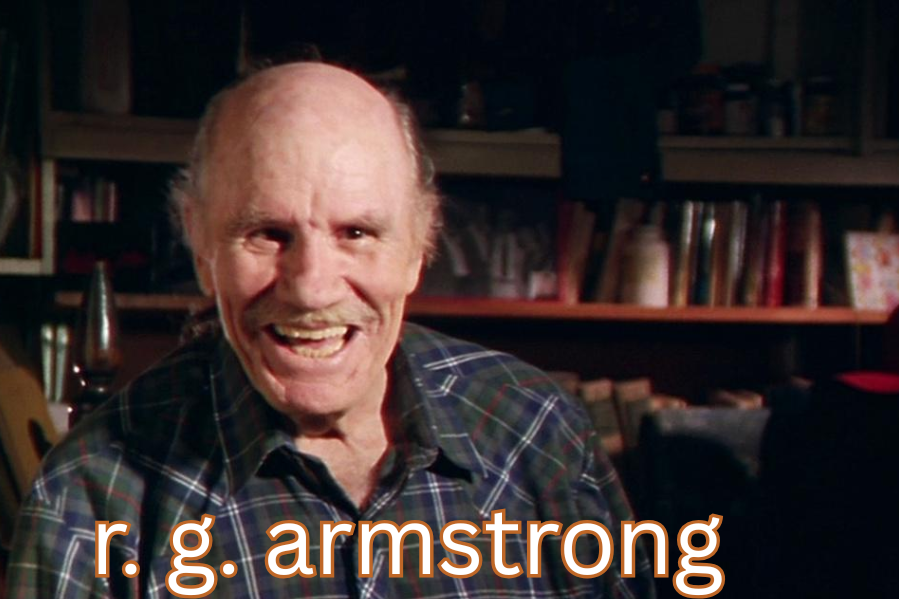
R. G. Armstrong could make a scene unsettling simply by entering it. His gravelly Southern voice and imposing presence made him a distinctive American character actor. Audiences may recognise him from Westerns, Predator or Friday the 13th: The Series.
Born Robert Golden Armstrong Jr., he built a career that stretched from Broadway drama to Hollywood thrillers. His work with Sam Peckinpah remains important, but his range extended beyond stern preachers and dangerous lawmen. R. G. Armstrong Quick Bio
| Detail | Information |
|---|---|
| Full Name | Robert Golden Armstrong Jr. |
| Professional Name | R. G. Armstrong |
| Date of Birth | April 7, 1917 |
| Birthplace | Pleasant Grove, Alabama, USA |
| Nationality | American |
| Profession | Actor and Playwright |
| Famous For | Western Films and Character Acting |
| Education | Howard College, University of North Carolina |
| Height | Not reliably confirmed |
| Marital Status | Married Three Times |
| Spouses | Ann Neale, Susan Guthrie, Mary Craven |
| Children | Four |
| Notable Movies | Predator, El Dorado, Dick Tracy, Ride the High Country |
| Years Active | 1950s–2001 |
| Net Worth | Not Publicly Verified |
| Date of Death | July 27, 2012 |
| Age at Death | 95 Years |
| Place of Death | Studio City, California, USA |
| Cause of Death | Natural Causes |
Alabama Roots and an Unexpected Artistic Direction
Armstrong was born on 7 April 1917 in Pleasant Grove, Alabama, near Birmingham, and grew up in a deeply religious family. Fundamentalist Christian teachings shaped his childhood. His mother hoped he would become a minister, a striking contrast with the profession he eventually pursued.
After attending Hueytown High School, he enrolled at Howard College, the institution now known as Samford University. He transferred to the University of North Carolina at Chapel Hill and embraced theatre.
The university’s Carolina Playmakers gave him opportunities to perform, develop discipline and engage with dramatic writing. He also became friends with fellow student Andy Griffith, whose later success in American television would provide another connection between their university days and Hollywood careers.
Writing Came Before Stardom
Acting was not Armstrong’s only ambition. He wrote plays, fiction and poetry. His literary interests may have informed the complexity of his characters.
In a 1966 interview, he discussed an extensive body of plays, unpublished novels and poetry. The ambition to write seriously remained part of his identity even as screen acting provided his livelihood.
New York Theatre Built His Reputation
After university, Armstrong moved to New York and studied at the Actors Studio, where he encountered the demanding performance culture associated with Lee Strasberg. The training emphasised believable emotional behaviour.
In 1953, he joined End as a Man, a production that moved from Off-Broadway to Broadway. The experience connected him with a generation of influential American performers.
A more significant opportunity arrived with the original Broadway production of Tennessee Williams’ Cat on a Hot Tin Roof in 1955, directed by Elia Kazan. Armstrong originated the role of Dr Baugh and understudied Big Daddy, initially played by Burl Ives. He also performed as Big Daddy during Ives’ absence in late 1955.
His earliest screen appearances included Garden of Eden (1954), but the stage remained central to his development. His Broadway credits continued with Orpheus Descending, The Miracle Worker and The Long Dream. Before Westerns made him familiar, serious American theatre had already shaped his craft.
How Television Westerns Made Him Familiar
By the late 1950s, Armstrong was working increasingly in Hollywood. Western television was flourishing, and its weekly stories needed actors capable of making sheriffs, ranchers, criminals and suspicious townspeople convincing within a limited running time.
He appeared in Gunsmoke, Bonanza, The Rifleman, Rawhide, Maverick, Have Gun – Will Travel and other popular series. The parts varied, but his weathered features and firm delivery made him especially effective whenever a story required conflict or authority.
He also played police Captain McAllister opposite Robert Loggia in the short-lived NBC crime drama T.H.E. Cat (1966–1967), one of his more sustained television parts. Television provided steady work with different directors and casts. He became a dependable performer who could sharpen almost any episode.
The Sam Peckinpah Partnership
Armstrong’s association with Sam Peckinpah became a defining chapter of his career. The two worked together on the 1960 television Western The Westerner, beginning a creative relationship that carried into several influential feature films.
Faith, Violence and Moral Contradiction
In Ride the High Country (1962), Armstrong played Joshua Knudsen, a religiously rigid father whose treatment of his daughter exposes the disturbing side of moral certainty. The film, starring Randolph Scott and Joel McCrea, used him to complicate its portrait of honour and the changing American West.
In Major Dundee (1965), he appeared as a minister amid a violent military expedition. The Ballad of Cable Hogue (1970) showed his versatility in a gentler Western. Later, Pat Garrett and Billy the Kid (1973) cast him as the brutal deputy Ollinger.
These characters were not interchangeable. Peckinpah recognised Armstrong’s ability to portray men who considered themselves righteous while behaving with aggression or cruelty. His religious upbringing lent familiarity to the convictions shaping these roles.
Major Films Beyond the Peckinpah Westerns
Armstrong’s versatility is clear from the directors and genres represented in his filmography. In Howard Hawks’ El Dorado (1966), alongside John Wayne and Robert Mitchum, he played Kevin MacDonald, a rancher whose family becomes entangled in the film’s conflict.
He also appeared in The Great White Hope (1970), the boxing drama starring James Earl Jones, and My Name Is Nobody (1973), a Western comedy featuring Henry Fonda and Terence Hill. Both tested his range.
Another important collaborator was Warren Beatty. Armstrong appeared in Heaven Can Wait (1978), Reds (1981) and Dick Tracy (1990). In the latter, heavy makeup transformed him into Pruneface, one of the comic-strip villains surrounding Beatty’s title character.
Such variety reflected his adaptability. He could inhabit Westerns, historical drama and comic-book fantasy without losing credibility.
Horror, Action and a New Generation of Viewers
His work in the 1980s introduced him to audiences who had little connection with the Western television era. In Children of the Corn (1984), adapted from Stephen King’s story, he played Diehl, while Predator (1987) featured him as Major General Homer Phillips, an officer connected to the dangerous mission undertaken by Arnold Schwarzenegger’s team.
On television, he took a distinctly sinister turn as Lewis Vendredi in Friday the 13th: The Series. The character’s dealings with cursed antiques underpin the supernatural programme, which ran from 1987 to 1990. Armstrong appeared in several episodes, giving the recurring villain a memorable, menacing personality.
Such roles prevented him becoming a period-piece curiosity. Horror audiences could discover a different side of him in classic Westerns. His filmography ultimately extended to more than 160 screen credits by some entertainment databases, although counts vary by catalogue and method.
The Man Behind the Severe Screen Image
Armstrong’s performances frequently suggested stubbornness, suspicion or barely restrained fury, but that screen image should not be mistaken for a complete picture of the man. Accounts of his life also describe his warmth, humour and enduring friendships within the profession.
He was married three times. His first marriage was to Ann Neale, with whom he had four children. He subsequently married Susan Guthrie and later Mary Craven, who died in 2003. He largely kept family life separate from his public persona.
As he aged, he embraced older authority figures and eccentric supporting roles.
Retirement, Death and an Enduring Reputation
Armstrong continued acting into the closing years of the twentieth century. His later credits included the television Western Purgatory (1999) and the 2001 film The Waking, also known as Keeper of Souls. He then retired from professional acting.
He died of natural causes on 27 July 2012 at his home in Studio City, California, aged 95. His career connected Broadway with generations of American screen entertainment.
His legacy rests on the conviction, tension and humanity he brought to supporting roles.
Conclusion
R. G. Armstrong rarely needed top billing to command attention. Whether portraying a conflicted father in a Western, a threatening supernatural villain or a senior military officer, he brought texture to roles that might otherwise have been routine.
His career demonstrates why character actors remain essential to memorable storytelling: they make a fictional world feel inhabited, unpredictable and real.
Frequently Asked Questions
Who was R. G. Armstrong?
R. G. Armstrong, born Robert Golden Armstrong Jr., was an American stage, film and television actor. He became especially well known for Westerns and his collaborations with Sam Peckinpah, while also appearing in Broadway productions, horror films, action movies and popular television series over several decades.
How old was R. G. Armstrong when he died?
He was 95 years old. Armstrong was born on 7 April 1917 and died on 27 July 2012 at his home in Studio City, California. His long career had already concluded, with his final screen work dating from the early 2000s.
What were R. G. Armstrong’s most famous movies?
His best-known films include Ride the High Country, Major Dundee, El Dorado, Pat Garrett and Billy the Kid, Children of the Corn, Predator and Dick Tracy. These titles illustrate how successfully he moved between Westerns, drama, horror, action and stylised crime entertainment.
Was R. G. Armstrong married, and did he have children?
Yes. Armstrong married Ann Neale, Susan Guthrie and Mary Craven during his lifetime. He had four children with Neale, his first wife. His third wife, Craven, died in 2003. His family relationships are documented in biographical and theatrical records, although he kept much of his private life out of public attention.
Did R. G. Armstrong play Big Daddy on Broadway?
Yes, but he was not the original principal actor in that role. In the 1955 Broadway production of Cat on a Hot Tin Roof, Armstrong originally played Dr Baugh and understudied Big Daddy, the part associated with Burl Ives. He took over as Big Daddy temporarily during Ives’ absence in November and December 1955.
READ THIS TOO Victor Argo: The New York Actor Who Made Every Scene Count

One Comment