Malcolm Atterbury: The Character Actor Behind Hollywood’s Memorable Scenes
Malcolm Atterbury: Early Life, Acting Career, Famous Movies, Personal Life and Lasting Hollywood Legacy

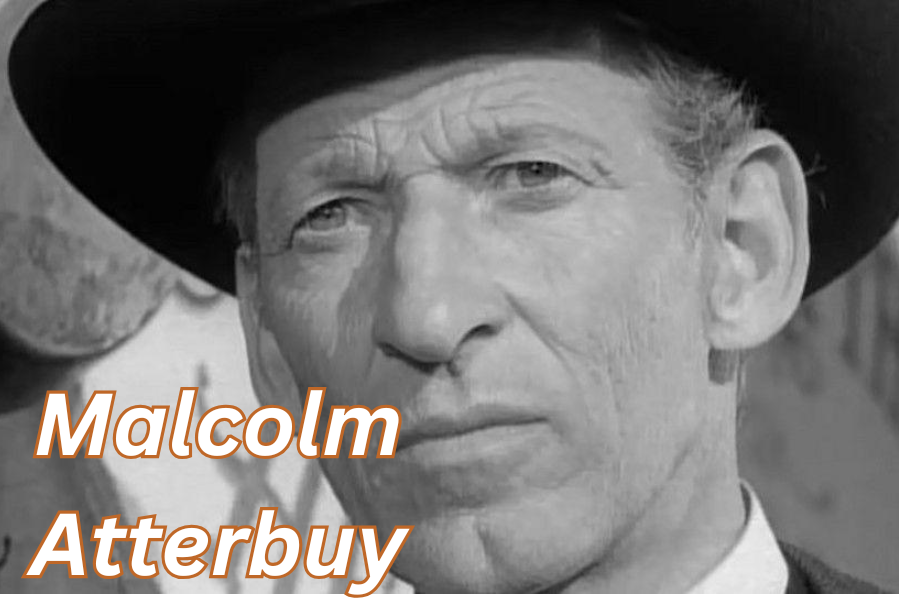
Introduction
Some actors become famous through leading roles. Others leave an equally lasting impression with only a few lines. Malcolm Atterbury belonged to the second group. His brief appearance beside Cary Grant in Hitchcock’s North by Northwest remains familiar, even when his name does not.
Yet that scene was only part of his career. Atterbury was an American actor and former vaudeville performer who worked across theatre, cinema and television. He also helped run professional playhouses that gave emerging performers valuable opportunities. His story celebrates the character actors who made Hollywood believable.
Malcolm Atterbury – Quick Bio
| Detail | Information |
|---|---|
| Full Name | Malcolm MacLeod Atterbury |
| Known As | Malcolm Atterbury |
| Date of Birth | February 20, 1907 |
| Birthplace | Philadelphia, Pennsylvania, USA |
| Date of Death | August 16, 1992 |
| Age at Death | 85 years |
| Nationality | American |
| Profession | Actor, Vaudeville Performer, Theatre Manager |
| Famous For | North by Northwest (1959), The Birds (1963) |
| Other Notable Work | Perry Mason, Gunsmoke, Apple’s Way |
| Education | The Hill School, Pennsylvania |
| Wife | Ellen Ayres Hardies |
| Children | Three |
| Father | Malcolm MacLeod Sr. |
| Stepfather | William Wallace Atterbury |
| Years Active | 1930s–1970s |
| Net Worth | Not publicly verified |
| Place of Death | Beverly Hills, California, USA |
Early Life and Family Background
Malcolm MacLeod Atterbury was born on February 20, 1907, in Philadelphia, Pennsylvania. He grew up in a prosperous family with close connections to American business. His biological father was Malcolm MacLeod Sr.; after his father’s death, his mother, Arminia Clara Rosengarten MacLeod, married railway executive William Wallace Atterbury in 1915.
William Wallace Atterbury, who became president of the Pennsylvania Railroad, adopted Malcolm and his brother George. Some biographies omit that distinction.
Malcolm chose a path beyond the railroad industry. He attended The Hill School in Pennsylvania, but his professional ambitions ultimately led him towards performance rather than corporate management.
From Radio and Vaudeville to the Stage
Before appearing in Hollywood films, Atterbury acquired experience in several branches of entertainment. In the late 1920s, he sang with a quartet on Philadelphia radio before moving into station management.
Vaudeville provided another important foundation. Its demanding live format taught timing and adaptability, skills useful in short screen roles.
By the 1930s, theatre had become central to his working life. He built his career around acting and production.
Building Opportunities in Regional Theatre
The Tamarack and Albany Playhouses
Atterbury’s contribution to American theatre extended far beyond his performances. With his wife Ellen, he operated the Tamarack Playhouse in Lake Pleasant, New York, and a professional playhouse in Albany. They offered summer and winter stock productions, respectively.
The Albany operation was particularly unusual: it was described as the country’s only Equity winter stock company at the time. These venues helped performers develop their skills beyond Broadway.
Among the future stars associated with the Atterburys’ theatres were Grace Kelly, Kirk Douglas, Karl Malden, Cliff Robertson, Barbara Cook and Tom Bosley. His theatre work remains an important achievement. Running a playhouse also meant balancing production schedules, performers and audiences. That practical experience helps explain the grounded confidence he later brought to short screen appearances.
A Broadway Credit Worth Remembering
He continued stage acting. In 1963, Atterbury appeared as Scanlon in the original Broadway production of One Flew Over the Cuckoo’s Nest, adapted by Dale Wasserman from Ken Kesey’s novel.
The production featured Kirk Douglas as Randle P. McMurphy and a young Gene Wilder as Billy Bibbit. He continued moving between stage and screen.
Entering Hollywood and Finding His Screen Identity
Atterbury moved into Hollywood work in the early 1950s and made his feature-film debut in Dragnet (1954). He brought decades of performing experience rather than leading-man glamour.
His tall frame, lean face and distinctive delivery suited an unusually wide range of supporting parts. He convincingly played bystanders, authority figures, ministers and officials.
The Hitchcock Scenes That Secured His Place in Film History
North by Northwest (1959)
Atterbury’s most recognisable performance is also one of his shortest. In Hitchcock’s North by Northwest, he plays a man waiting near an isolated rural bus stop when Cary Grant’s character, Roger Thornhill, arrives. The stranger notices an aircraft dusting a field without crops.
That matter-of-fact observation helps establish the unease preceding the famous crop-duster attack. His dry understatement adds realism before the danger unfolds.
Though uncredited, the scene became closely associated with his name. Its tension grows from contrast: Thornhill is stranded and uneasy, while the stranger seems entirely at home in the landscape. Their exchange makes the approaching threat even stranger.
The Birds (1963)
Hitchcock later cast Atterbury as Deputy Al Malone in The Birds. He played a local lawman amid unexplained bird attacks on a California town.
Both films use his understated realism. In one, his ordinary presence makes an extraordinary threat more unsettling. In the other, he helps populate a community whose familiar routines are steadily collapsing.
More Than a Hitchcock Supporting Player
Atterbury’s filmography ranged across crime dramas, Westerns, horror and serious literary adaptations. In I Was a Teenage Werewolf (1957), he played Charles Rivers; in Summer and Smoke (1961), he portrayed Reverend Winemiller. His work also included Wild River (1960), Advise & Consent (1962) and The Chase (1966).
He appeared in The Learning Tree (1969), directed by Gordon Parks, as Silas Newhall. Another notable later credit was Emperor of the North (1973), in which he played Hogger. Although that film is sometimes described as his final movie, filmographies also record minor, uncredited screen appearances in 1974, making it more accurate to regard it as one of his last substantial film roles.
What connects these very different productions is his ability to make modest parts useful. He added gravity without distracting from the central story.
A Familiar Face on Classic American Television
Television offered Atterbury steady work as episodic drama expanded. His credits include Gunsmoke, Perry Mason, The Twilight Zone, Bonanza, The Fugitive, The Andy Griffith Show and Alfred Hitchcock Presents. Across his career, he accumulated appearances in hundreds of television episodes.
On Perry Mason, he appeared in five episodes and played a murderer in three of them, demonstrating that casting directors trusted him with more than one kind of personality. His Western appearances similarly suited his plainspoken manner and weathered appearance, though his range reached well beyond frontier settings.
His guest roles demanded quick characterisation and sensitivity to each programme’s established tone.
Grandfather Aldon in Apple’s Way
One of his most sustained television assignments came with the CBS family drama Apple’s Way, which aired from 1974 to 1975. Atterbury played Grandfather Aldon, part of a family seeking a quieter life after leaving Los Angeles for a small Iowa community.
The show featured Ronny Cox and Frances Lee McCain, with Atterbury appearing throughout its 28 episodes. The recurring role gave him room to develop a character.
His grandfatherly casting drew on a combination of stubbornness, humour and warmth. It introduced him to new viewers.
Personal Life and Final Years
Atterbury married Ellen Ayres Hardies on February 6, 1937. They had three children and shared an enduring professional involvement in the theatre. Their partnership also supported other actors.
His screen career continued into the late 1970s, with later television credits including Quincy, M.E. and Little House on the Prairie. He died in Beverly Hills, California, on August 16, 1992, aged 85.
Although he came from a financially privileged background, a verified figure for his personal net worth is not publicly established. His artistic contributions are better documented.
An Understated but Lasting Legacy
Atterbury’s reputation rests on a kind of acting that is easy to overlook. He made neighbours, officials, suspects and grandfathers credible without dominating scenes.
His career also connects different eras of entertainment: early radio, vaudeville, regional stock theatre, studio filmmaking and network television. He is remembered for Hitchcock and for giving future stars stage experience.
Conclusion
Malcolm Atterbury was more than the stranger beside Cary Grant in North by Northwest. He was an adaptable character actor, a Broadway performer and a theatre operator whose career touched several generations of American entertainment. He proved that a small role can make a lasting impression.
Frequently Asked Questions
Who was Malcolm Atterbury?
Malcolm Atterbury was an American stage, film and television actor who also worked in vaudeville and theatre management. Born in Philadelphia in 1907, he became a familiar supporting performer in classic Hollywood films and television programmes. He is especially remembered for two appearances in Alfred Hitchcock films.
What was Malcolm Atterbury’s most famous movie role?
His best-known appearance was the uncredited rural bystander in North by Northwest (1959). The character observes an aircraft behaving strangely before Cary Grant’s famous crop-duster encounter. Atterbury also played Deputy Al Malone in Hitchcock’s The Birds (1963), another prominent credit in his screen career.
Was Malcolm Atterbury related to the Pennsylvania Railroad president?
Yes. William Wallace Atterbury, the Pennsylvania Railroad executive, was his stepfather and adoptive father rather than his biological father. Malcolm’s mother married the executive in 1915 after the death of her first husband. Malcolm pursued acting instead of building a career in the railroad business.
Who was Malcolm Atterbury’s wife?
He married Ellen Ayres Hardies in 1937, and they had three children. Ellen was also his professional partner in regional theatre. Together they operated playhouses in Lake Pleasant and Albany, New York, combining performance with management and helping create opportunities for developing actors.
When did Malcolm Atterbury die, and how old was he?
Malcolm Atterbury died on August 16, 1992, in Beverly Hills, California. He was 85 years old, having been born on February 20, 1907. His screen work had continued into the late 1970s, following decades of activity in theatre, film and television.
READ THIS TOO Kahlil Ashanti: From Award-Winning Performer to Tech Founder

One Comment