Seth Arnold: The Life, Broadway Career and Legacy of a Classic American Actor
Exploring Seth Arnold’s Early Life, Broadway Career, Film Roles, Personal Life, and Lasting Legacy in American Theatre

Introduction
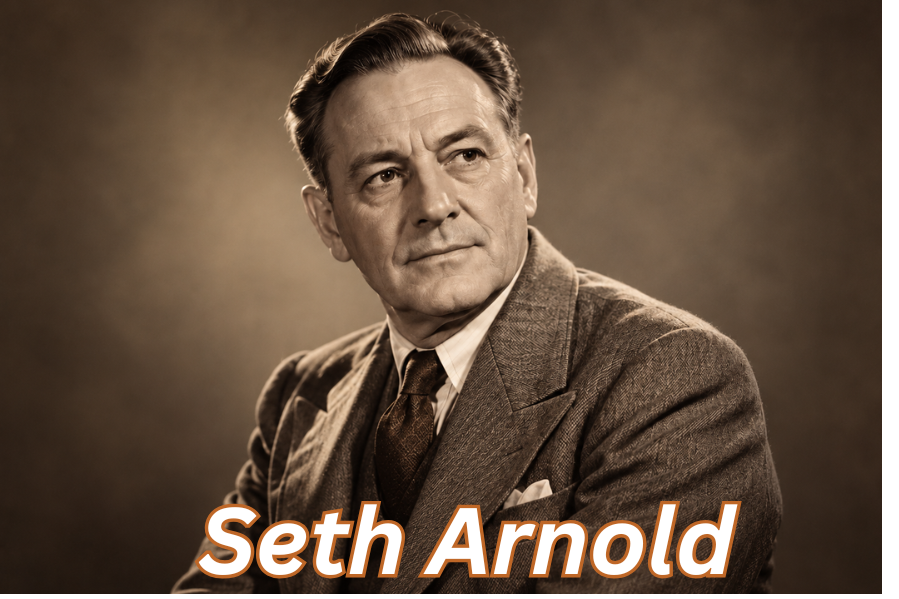
Seth Arnold (1885–1955) was an American stage and screen actor whose professional career extended across more than five decades. Born in London to American parents, he established himself in American theatre before appearing in Hollywood films and early television productions.
His career included performances in Broadway dramas, theatrical productions associated with prominent playwrights, and films such as Lost Boundaries (1949) and The Whistle at Eaton Falls (1951).
Although he never achieved the widespread fame of Hollywood’s biggest stars, Arnold developed an extensive theatrical career. His work included acting, directing and portraying characters in productions addressing political, social and family themes.
His professional journey provides an interesting perspective on American entertainment during the first half of the twentieth century, particularly the relationship between traditional theatre and emerging screen entertainment. Seth Arnold – Quick Bio
| Detail | Information |
|---|---|
| Full Name | Seth Arnold |
| Birth Year | 1885 |
| Birthplace | London, England |
| Nationality | American |
| Profession | Actor and Theatre Director |
| Known For | Broadway Theatre, Lost Boundaries (1949) |
| Career Began | 1901 |
| Famous Films | Lost Boundaries, The Whistle at Eaton Falls |
| Television Shows | Studio One, Lux Video Theatre |
| Notable Broadway Play | It Can’t Happen Here (1936) |
| Marital Status | Married |
| Wife | Laurie McVicker |
| Children | Not publicly confirmed |
| Death Date | 3 January 1955 |
| Place of Death | New York City, USA |
| Age at Death | Approximately 69–70 years |
| Net Worth | Not publicly verified |
Early Life and Family Background
Arnold was born in London in 1885 while his American family was living in England. His father worked there as a representative of the American Tobacco Company. The family later returned to the United States, where Arnold began pursuing theatre rather than following a documented career in business.
In 1901, he joined the Castle Square Stock Company in Boston. His first recorded acting opportunity was modest: a single line in a production of Quo Vadis. Little verified material survives about his formal education or childhood interests. What is clear is that he entered the profession early and remained connected to theatre through substantial changes in American entertainment.
From Young Actor to Theatre Director
Arnold’s professional interests eventually extended beyond performing. During the First World War, biographical accounts describe him undertaking intelligence work for the United States government. Details of his duties are not well documented publicly.
After the war, he worked as a theatrical director, with productions in Boston, Chicago, St. Louis and Jersey City. His return to documented Broadway acting came with Arabian Nightmare in 1927, in which he played Mr Horatio Bumble. The following year, he appeared as Doctor Shaw in Quicksand. Both credits mark the beginning of the extensive New York stage record that survives today.
Building a Broadway Career
Drama, Comedy and Character Roles
Arnold’s Broadway work expanded during the late 1920s and early 1930s. He portrayed Lieutenant “Pop” Touso in Conflict (1929), William Summers in Steel (1931) and Seth Beckwith in the 1932 revival of Eugene O’Neill’s Mourning Becomes Electra.
The O’Neill production is particularly important to his theatrical history. Arnold played Seth Beckwith in a Theatre Guild staging of a demanding family tragedy, placing him within a notable chapter of American dramatic theatre.
He moved between contrasting parts rather than staying within one kind of production. In The Pursuit of Happiness (1933), he played Reverend Lyman Banks. In Symphony (1935), his credited parts included a priest, a bartender and a tramp.
A Major Role in It Can’t Happen Here
One of Arnold’s most distinctive Broadway credits was Doremus Jessup in the 1936 stage adaptation of Sinclair Lewis’s It Can’t Happen Here. Jessup is a newspaper editor confronting the rise of authoritarian politics in the United States.
The production opened at the Adelphi Theatre in October 1936 and was associated with the Federal Theatre Project, a programme supported by the Works Progress Administration. Its subject matter made the play an unusual example of contemporary political drama.
Arnold’s performance placed him at the centre of a story about civil liberties, power and resistance. The Broadway production ran for 95 performances, and the part remains one of the clearest examples of his involvement in socially engaged theatre.
Directing and Further Stage Achievements
Alongside his acting credits, Arnold directed the Broadway production The Devil of Pei-Ling in 1936. The credit confirms that his directing work continued after his earlier regional theatre experience.
His subsequent stage work included Many Mansions (1937), in which he played Reverend Josiah Ward, and Clash by Night (1941), where he appeared as Vincent Kress. He also performed in Harriet (1943), a theatrical work about Harriet Beecher Stowe featuring Helen Hayes, playing Jerusha Pantry.
During the mid-1940s, he appeared in Last Stop, A Place of Our Own, A Joy Forever and I Like It Here. In Years Ago, which opened in December 1946, he portrayed Mr Sparrow. That production remained on Broadway until May 1947.
Film Appearances and the Move to Television
Lost Boundaries (1949)
Arnold’s best-documented film appearance was in Lost Boundaries, directed by Alfred L. Werker. He played Clint Adams in the drama, which starred Mel Ferrer and Beatrice Pearson.
The film follows a Black physician and his family as they navigate racial discrimination and conceal their identity in a segregated society. Its treatment of racial passing and prejudice gives it an important place in discussions of American cinema, although its casting choices have also attracted criticism.
The Whistle at Eaton Falls (1951)
He also appeared as a sheriff in The Whistle at Eaton Falls, a drama directed by Robert Siodmak and starring Lloyd Bridges and Dorothy Gish. His part is recorded as uncredited in film-cast records.
The film explores labour relations and the difficulties facing a New England manufacturing business. Together with Lost Boundaries, it illustrates the kinds of contemporary American subjects represented in his limited surviving filmography.
Early Television Work
Arnold also appeared during television’s early dramatic era. In a 1949 episode of Studio One titled “Two Sharp Knives”, he played Doc Kamsley. His television credits are also associated with anthology programmes such as The Ford Theatre Hour and Lux Video Theatre.
Final Broadway Appearance and Personal Life
Arnold returned to Broadway in Arms and the Girl, which opened in February 1950. He played Thad Jennings in the original musical, which ran until May of that year. It is his last Broadway production recorded in the Internet Broadway Database.
He was married to actress Laurie McVicker, her professional name. Publicly accessible biographical material provides limited additional detail about their home life, and there is no sound basis for making claims about children or private family circumstances.
Arnold died in New York City on 3 January 1955. The historical Broadway record gives his birth year as 1885, meaning he was approximately 69 or 70 at the time of his death, depending on his birthday.
Reputation and Place in Theatre History
Arnold’s career is best understood through its continuity and range. He worked in stock-company theatre, became a director, returned to Broadway and took roles in film and television. His credits include the work of Eugene O’Neill, political drama associated with Sinclair Lewis and productions featuring well-known theatrical performers.
His contribution lay in sustained professional acting and directing, often through supporting characters that helped populate larger stories.
Conclusion
Seth Arnold built a lengthy career on American stages before extending his work to films and early television. From a one-line role in 1901 to notable Broadway productions and appearances in post-war dramas, his professional life reflected a changing theatrical landscape.
His legacy rests less on celebrity than on the range of characters, productions and creative responsibilities recorded across decades of performance.
Frequently Asked Questions
Who was Seth Arnold?
Seth Arnold was an American character actor and theatrical director born in London in 1885. He began performing in Boston in 1901 and went on to build an extensive Broadway career. He is associated with productions including Mourning Becomes Electra and It Can’t Happen Here, as well as film appearances in the late 1940s and early 1950s.
When was Seth Arnold born, and when did he die?
The Internet Broadway Database records his birth year as 1885 and his birthplace as London, England. He died in New York City on 3 January 1955. Some online references give a different birth year, but the Broadway record supports 1885; an exact birth date is not established in the sources consulted.
What was Seth Arnold best known for?
He is particularly notable for portraying Doremus Jessup in the 1936 Broadway adaptation of Sinclair Lewis’s It Can’t Happen Here. His stage career also included a role in Eugene O’Neill’s Mourning Becomes Electra. Film audiences may recognise his name from Lost Boundaries, in which he portrayed Clint Adams.
Which films and television shows featured Seth Arnold?
His film credits include Lost Boundaries (1949) and an uncredited sheriff role in The Whistle at Eaton Falls (1951). On television, he appeared in Studio One, including the episode “Two Sharp Knives”. Other anthology credits associated with him include The Ford Theatre Hour and Lux Video Theatre.
Was Seth Arnold married?
Yes. He was married to fellow performer Laurie McVicker, who used that name professionally. The surviving public biographical record focuses far more heavily on his theatrical work than his domestic life. Details such as his children’s names, if any, are not reliably established and should not be assumed.
Did Seth Arnold work as a director?
Yes. In addition to acting, he directed theatrical productions in several American cities after the First World War. His documented Broadway directing credit includes The Devil of Pei-Ling, staged in 1936. This aspect of his career shows that his professional involvement extended beyond the performances for which he is usually remembered.
READ THIS TOO https://primetrack.co.uk/sidney-armus-the-broadway-actor-behind-memorable-film-and-tv-roles/


One Comment