Phil Austin: The Voice Behind Nick Danger and Firesign Theatre
Phil Austin Biography: Early Life, Career, Firesign Theatre, Personal Life and Legacy

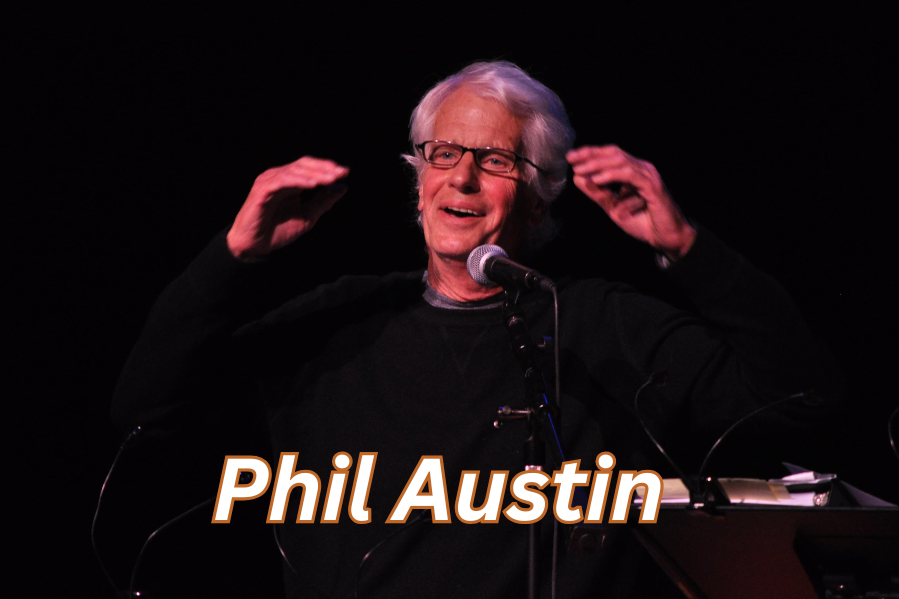
Phil Austin helped turn the comedy album into more than a collection of jokes. As a founder of Firesign Theatre, he built strange worlds through dialogue, sound effects and the familiar rhythms of broadcasting. His best-known creation, detective Nick Danger, remains an enduring character of experimental audio comedy.
Another performer named Phil Austin has appeared in films including Olympus Has Fallen. His screen credits are unrelated to the comedy recordings that made the Firesign Theatre founder famous. Phil Austin Quick Bio
| Details | Information |
|---|---|
| Full Name | Philip Baine Austin |
| Popular Name | Phil Austin |
| Date of Birth | 6 April 1941 |
| Place of Birth | Denver, Colorado, USA |
| Date of Death | 18 June 2015 |
| Age at Death | 74 years |
| Nationality | American |
| Profession | Comedian, Writer, Musician, Voice Actor and Record Producer |
| Famous For | Co-founding Firesign Theatre and voicing Nick Danger |
| Education | Attended Bowdoin College, Fresno State and UCLA |
| Spouse | Oona Elliott |
| Notable Group | Firesign Theatre |
| Famous Character | Nick Danger, Third Eye |
| Notable Albums | Don’t Crush That Dwarf, Hand Me the Pliers, Roller Maidens From Outer Space |
| Net Worth | Not publicly verified |
| Place of Death | Fox Island, Washington, USA |
| Legacy | Pioneer of surreal radio and recorded comedy |
Who Was Phil Austin?
Born Philip Baine Austin on 6 April 1941 in Denver, Colorado, he was an American comedian, writer, musician and voice performer. He became famous through Firesign Theatre, the four-man comedy ensemble he formed with Peter Bergman, David Ossman and Phil Proctor.
The group emerged from 1960s counterculture, but its material extended beyond topical jokes. Its recordings mocked advertising, political rhetoric and the supposedly authoritative voices heard on radio and television. Austin contributed character performances alongside musical and production skills.
Early Life: From Fresno to Los Angeles
Austin grew up in Fresno, California. His mother taught drama, providing an early connection to acting and theatrical storytelling. That background informed his later gift for creating distinct characters through voice alone.
A swimming scholarship took him to Bowdoin College in Brunswick, Maine. He also attended Fresno State and the University of California, Los Angeles, but did not graduate. His route into entertainment was shaped more by practical experience than academic qualifications.
In Los Angeles, he worked with the Center Theatre Group and performed on stage. He also became director of drama and literature at public radio station KPFK, where he encountered his future collaborators.
How Firesign Theatre Began
Austin met Bergman, Ossman and Proctor through KPFK. In November 1966, the four performed together on Bergman’s Radio Free Oz programme. Their improvisation evolved into Firesign Theatre, named for the astrological fire signs under which its members were born.
Instead of delivering disconnected punchlines, they performed interwoven scenes, switched identities and made sound part of the story. A mock advertisement might interrupt a conversation before leading into an entirely different fictional world.
The group signed with Columbia Records and released Waiting for the Electrician or Someone Like Him in 1968.
Comedy Built for Listening
Firesign Theatre layered invented broadcasts, recurring characters and unexpected interruptions into narratives that demanded attention.
Austin’s ability to switch voices helped make those imagined broadcasts persuasive. Musical cues and carefully arranged sound effects added texture. Although the results sometimes sounded chaotic, they depended on precise acting and editing.
Breakthrough Albums and Career Highlights
The 1969 album How Can You Be in Two Places at Once When You’re Not Anywhere at All introduced Austin’s signature character. The following year’s Don’t Crush That Dwarf, Hand Me the Pliers pushed the group’s experiments further, combining fictional programming with satire of American popular culture.
I Think We’re All Bozos on This Bus (1971) imagined a futuristic entertainment environment, while Everything You Know Is Wrong (1974) explored media absurdity and conspiracy thinking.
Recognition eventually extended beyond comedy fans. The Library of Congress selected Don’t Crush That Dwarf, Hand Me the Pliers for the National Recording Registry in 2005, acknowledging its cultural significance and advanced recording techniques.
Nick Danger: His Most Famous Character
Nick Danger, Third Eye, was Austin’s parody of the hard-boiled private detective familiar from old radio dramas. The character arrived with dramatic narration, baffling clues and an unwavering confidence that made every ridiculous situation funnier.
Nick debuted in The Further Adventures of Nick Danger on the 1969 album. A celebrated recurring detail is the backwards lettering on his office door: “REGNAD KCIN”. The joke exemplifies Firesign’s playful treatment of words, voices and perspective.
Austin performed the detective with a straight-faced seriousness that allowed the surrounding absurdity to flourish. Nick returned in later adventures, including The Three Faces of Al and Down Under Danger.
Other Voices and Musical Contributions
Austin also voiced Bebop Loco, a radio personality heard in later Firesign material, including Give Me Immortality or Give Me Death. Such characters parodied broadcasting itself, not merely the people behind microphones.
He played guitar and contributed to music and record production.
Solo Work, Writing and Commercial Voiceovers
In 1974, Austin created Roller Maidens From Outer Space, a solo-led audio project featuring his Firesign colleagues and other performers. He also worked on television comedy concepts and wrote the screenplay The Dead Sell Out in the early 1990s, with members of the Grateful Dead consulting on the project.
His Tales of the Old Detective and Other Big Fat Lies was released as an audiobook in 1995. Austin also voiced advertisements for major brands, including Apple, Nike, Nissan and Pizza Hut. These assignments drew upon his ability to make a character recognisable almost instantly.
Later Years and Professional Recognition
Although Firesign Theatre’s commercial peak came in the late 1960s and early 1970s, reunions brought new recordings and performances. The group released Give Me Immortality or Give Me Death (1998), Boom Dot Bust (1999) and Bride of Firesign (2001), satirising contemporary broadcasting and anxieties about technological change.
Firesign Theatre received Grammy nominations for comedy albums, including The Three Faces of Al, Give Me Immortality or Give Me Death and Bride of Firesign. The group’s influence also earned it recognition from cultural institutions beyond the entertainment industry.
Personal Life and Death
Austin was married to Oona Elliott, who worked as a television food stylist. He kept much of his family life outside the spotlight.
He died at his home on Fox Island, Washington, on 18 June 2015, after dealing with serious illness, including cancer. Published accounts differed about the immediate cause of death, making it important not to treat any single early explanation as definitive.
Fellow founder Peter Bergman had died in 2012. By then, Firesign Theatre’s major original collaborations had already concluded, but its extensive recordings continued to preserve their work.
Another Phil Austin: The Film and Television Actor
A different American actor named Phil Austin appeared as Vice President Charlie Rodriguez in Olympus Has Fallen (2013), Seeker Waverley in The Host (2013) and Mayor Jonas Stiegel in Zipper (2015).
His television credits include The Newsroom, For the People, Dirty John and 13 Reasons Why. These productions should not be attributed to the Firesign Theatre co-founder, despite occasional confusion between performers with the same name.
The simplest distinction is that the comedian is associated with Nick Danger and Firesign’s audio recordings; the other actor is associated with these film and television roles.
The Lasting Influence of His Comedy
Austin’s work anticipated the appeal of intricately produced audio fiction and narrative podcasts. Firesign Theatre used dialogue, unreliable voices and shifting soundscapes to suggest entire worlds without images.
That does not mean the group invented audio storytelling. Its achievement was to combine radio drama, satire and studio technology with unusual imagination. Austin could make the improbable sound persuasive, inviting listeners to follow the story even when its logic went deliberately astray.
This capacity to reward close, repeated listening helps explain why his recordings have endured beyond their original cultural moment.
Conclusion
Phil Austin created one of radio comedy’s memorable detectives while helping Firesign Theatre expand what recorded humour could accomplish. His achievements in performance, writing, music and production gave the group a sound of its own. Its early albums remain an illuminating introduction to his creativity.
Frequently Asked Questions
Who was Phil Austin?
Phil Austin was an American comedian, writer and musician best known as a founding member of Firesign Theatre. Born Philip Baine Austin in 1941, he helped produce surreal comedy albums that found an audience in the late 1960s and 1970s. His signature role was the fictional private investigator Nick Danger.
How old was Phil Austin when he died?
He was 74 years old. Born on 6 April 1941 in Denver, Colorado, Austin died on 18 June 2015 at his home on Fox Island, Washington. He had experienced serious health problems before his death, including cancer.
What made Nick Danger popular?
Nick Danger spoofed the mysterious cases, dramatic voices and confident heroes of classic radio detective shows. Austin delivered the character’s lines with deliberate seriousness, creating a humorous contrast with the increasingly nonsensical plots. The detective first appeared on a 1969 Firesign Theatre album and returned in subsequent productions.
Which Firesign Theatre album received national recognition?
Don’t Crush That Dwarf, Hand Me the Pliers, released in 1970, was selected for the National Recording Registry by the Library of Congress in 2005. The recording stands out for its sophisticated sound production and innovative use of overlapping dialogue, fictional broadcasts and cultural satire.
Was Phil Austin married?
Yes. Austin was married to Oona Elliott, a food stylist who worked in television. Their marriage was acknowledged in his official biography and obituary coverage. He did not make his personal relationships a central part of his public career, so much of the available biographical material concerns his creative work.
Is the Phil Austin from Olympus Has Fallen the same person?
No. The actor who played Vice President Charlie Rodriguez in Olympus Has Fallen is distinct from the Firesign Theatre comedian. The screen actor’s credits also include The Host, Zipper and several television dramas. The comedian is remembered primarily for Firesign Theatre and his portrayal of Nick Danger.
READ THIS TOO Ned Austin: The Character Actor Behind Maximum Overdrive and a Lasting Stage Legacy

One Comment